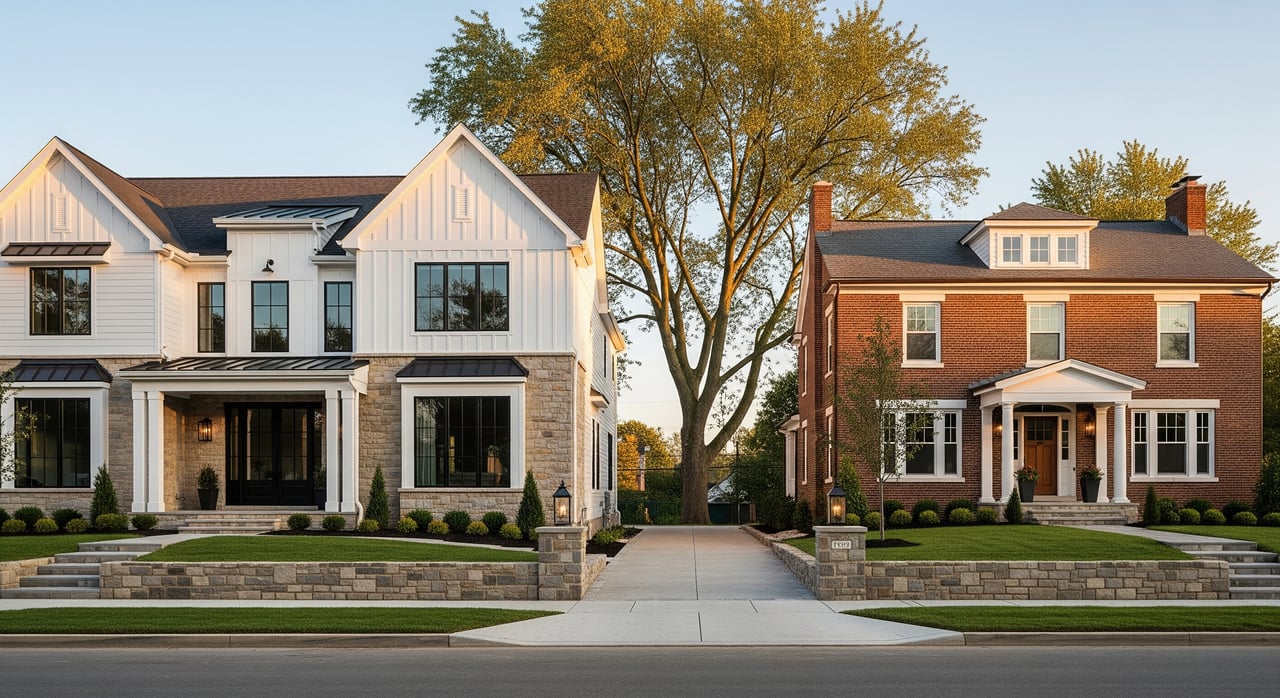
Trying to decide between a brand-new build and a move-in-ready resale in Monroe? You are not alone. Buyers here often weigh customization and warranties against established neighborhoods and quicker closings. In this guide, you will learn how each option works in Monroe, what it costs, how long it takes, and which local details you should verify before you choose. Let’s dive in.
Monroe market basics
Monroe spans Butler and Warren counties in the Cincinnati metro area, and that matters for your decision. County lines can affect taxes, permitting, and school district assignments. Always verify which county a property is in, along with utility connections, zoning, and any HOA or special assessments.
Demand in Monroe is driven by access to I-75 and Route 63, newer subdivisions, and proximity to area jobs. Local inventory and pricing shift throughout the year, so rely on your agent for the latest MLS data specific to Monroe rather than national headlines. For any property, confirm water and sewer service versus septic or well, HOA rules, and whether the lot sits in a tax-increment financing or special assessment area.
New construction at a glance
What builders offer
You will find three common paths. Production builders offer set floor plans with quicker timelines and predictable pricing in a subdivision. Semi-custom builders let you modify plans and finishes within limits. Custom builders deliver the most flexibility on private lots but require longer timelines and closer project management. In planned communities, developers handle roads and basic amenities, so confirm infrastructure timing and approvals with the city or county.
Costs to expect
New builds have a base price that typically includes the home, the lot, and some standard finishes. Plan for additional line items like utility tap fees, permits, and potential HOA initiation fees. Upgrades can include flooring, cabinetry, countertops, structural options such as a finished basement, and exterior work like grading and landscaping. Soft costs may include impact or special assessment fees and builder warranty charges. Property taxes can be phased in as improvements are assessed, so verify how the county auditor will value the completed home.
Timeline and process
Production homes often take about 4 to 9 months after permits, while semi-custom and custom builds can run 6 to 18 months. The typical sequence is lot selection, contract, financing approval, permits, framing and mechanicals, finishes, final inspection and certificate of occupancy, then closing. Build schedules can shift with weather, inspections, or supply chain issues. Ask the Monroe Building Department about current permit processing times and required inspections.
Financing for builds
Many buyers use a construction or construction-to-permanent loan, paying interest-only during the build before converting to a standard mortgage at completion. FHA and VA loans can be used for new construction if the builder meets program requirements. Appraisals may rely on comparable new homes rather than long-established sales, so talk with your lender about appraisal timing and contingencies. Some lenders ask for higher down payments or cash reserves for new builds.
Inspections and warranties
Municipal inspections occur at stages such as footings, framing, mechanical systems, and final sign-off. You should still hire an independent inspector. A useful rhythm is a pre-drywall inspection to see framing and mechanicals, then a final inspection before closing. Many builders offer a written warranty, often in a 1-2-10 format that covers workmanship in year one, systems for two years, and structural components for ten years. Get warranty terms in writing and document the punch list process for post-closing items.
Incentives and negotiation
Builder incentives change with the market. You may see closing cost credits, rate buydowns, or upgrade packages, especially if the builder has inventory to move. In tighter markets, there is less room to negotiate total price, but you can often find value in incentives and options that fit your needs.
New build pros and cons
- Pros: modern layouts, energy efficiency, low immediate maintenance, customization, and builder warranties.
- Cons: higher upfront price, longer timeline with possible delays, fewer mature trees and established landscaping, and property taxes that may rise as improvements are fully assessed.
Resale homes at a glance
Typical timeline
Resale purchases typically close in 30 to 60 days depending on financing, appraisal, and inspection timelines. You can move in soon after closing, which is helpful if you have a set move date or need to sell another home.
Costs to plan for
Beyond price and closing costs, plan for maintenance and potential updates. Check the age and condition of the roof, HVAC, water heater, appliances, siding, and windows. If you want to modernize, get contractor estimates early so you can compare a remodel budget against the premium for a new build.
Inspections and due diligence
Schedule a full home inspection. Additional checks may include radon testing, sewer or septic review, well water testing where applicable, pest inspections, and lead-based paint considerations for older homes. Complete a title and boundary review and confirm easements. Ask about basement water, sump pumps, and any documented repairs so you understand potential risks.
Financing for resales
Conventional, FHA, and VA financing are common for resales, subject to property condition. Appraisals rely on recent comparable sales in the neighborhood, and results may affect your final price and terms.
Resale pros and cons
- Pros: established neighborhoods and landscaping, faster occupancy, often more room for price and concession negotiations, and a known feel for traffic and community patterns.
- Cons: older systems with possible repairs sooner after purchase, potentially less energy efficiency, and layouts that may not match modern preferences without remodeling.
Monroe-specific decision checklist
Use this checklist to compare a new build and a resale side by side in Monroe:
- Confirm county: Butler or Warren, and how that affects taxes, permits, and schools.
- Verify school district assignment neutrally and directly with the district.
- Check utilities: municipal water and sewer versus well and septic, plus any tap or extension fees.
- Review HOA details: covenants, monthly or annual fees, and any initiation charges.
- Understand taxes: current taxes for resales and projected assessment after new construction.
- Clarify inspections: your right to hire independent inspectors, including pre-drywall for new builds.
- Check timelines: can you wait months for a build or do you need to move in 30 to 60 days?
- Estimate maintenance: age of roof, HVAC, water heater, and major appliances on resales.
- Evaluate commute: proximity to I-75, Route 63, major employers, shopping, and healthcare.
- Consider efficiency: newer homes often have lower utility costs due to modern codes.
Who each option fits
First-time buyers
If your priority is value and a predictable payment, a resale can stretch your budget further. New builds may still work when incentives line up, but factor in upgrades and time to completion.
Move-up buyers
If you want a modern layout and low maintenance, new construction is attractive. If you need a larger yard or faster move-in, a well-maintained resale may be the better fit.
Downsizers
A resale in an established area may offer simpler yardwork, mature landscaping, and convenient services. A new build can provide single-level living and energy savings if the location and HOA setup fits your lifestyle.
Investors
Resales offer established rental comps and the chance to add value with targeted updates. New builds can command a rental premium at first, but acquisition costs are typically higher.
How to compare two homes
When you tour a new build and a resale, record the same details for both. A practical side-by-side list includes:
- Lot size and year built.
- County and school district.
- HOA presence and fee schedule.
- Utility connections and any special assessments.
- Last replacement dates for roof, HVAC, and water heater.
- Warranty status for a new build and any transferable coverage on a resale.
- Immediate repairs or upgrades needed and estimated costs.
- Annual property taxes and expected assessment changes after completion for new construction.
- Commute times to your workplace and daily destinations.
- Neighborhood character notes such as traffic flow and access to parks or shopping.
Next steps in Monroe
Before you decide, confirm permit requirements and inspection schedules with the City of Monroe’s Building Department. Check tax and assessment questions with the Butler or Warren County Auditor, and verify any septic or well details through county health departments. For active market data, rely on Monroe-specific MLS reports and recent county sales records rather than general national averages. If you are considering a subdivision, ask the builder which items are included in the base price, which upgrades are required, and who pays for final grading, driveway, and landscaping.
You do not have to navigate these details alone. If you want a clear, side-by-side plan tailored to your budget and timeline, connect with Team Bush for local guidance, new-construction advisory, and buyer and seller representation that fits your goals.
FAQs
Will property taxes be higher after new construction in Monroe?
- Often yes, since the county will reassess the improved property after completion, so verify projected taxes with the county auditor before you commit.
Should I get an inspection on a brand-new Monroe home?
- Yes, schedule independent inspections, ideally pre-drywall and again before closing, even though municipal inspections occur during the build.
How long do builder warranties typically last in Monroe?
- Terms vary by builder, but a common model is 1 year for workmanship, 2 years for systems, and 10 years for structural components, so review the written warranty closely.
Can I negotiate with a builder in Monroe?
- Often yes, especially on incentives like closing cost help, rate buydowns, or upgrades, though leverage depends on current inventory and demand.
Which has better resale value in Monroe, new or resale homes?
- It depends on location, county, school district assignment, lot characteristics, and build quality, so compare specific properties rather than assuming one category always wins.